
Search
Green fertilizers
Champs à renseigner
Texte
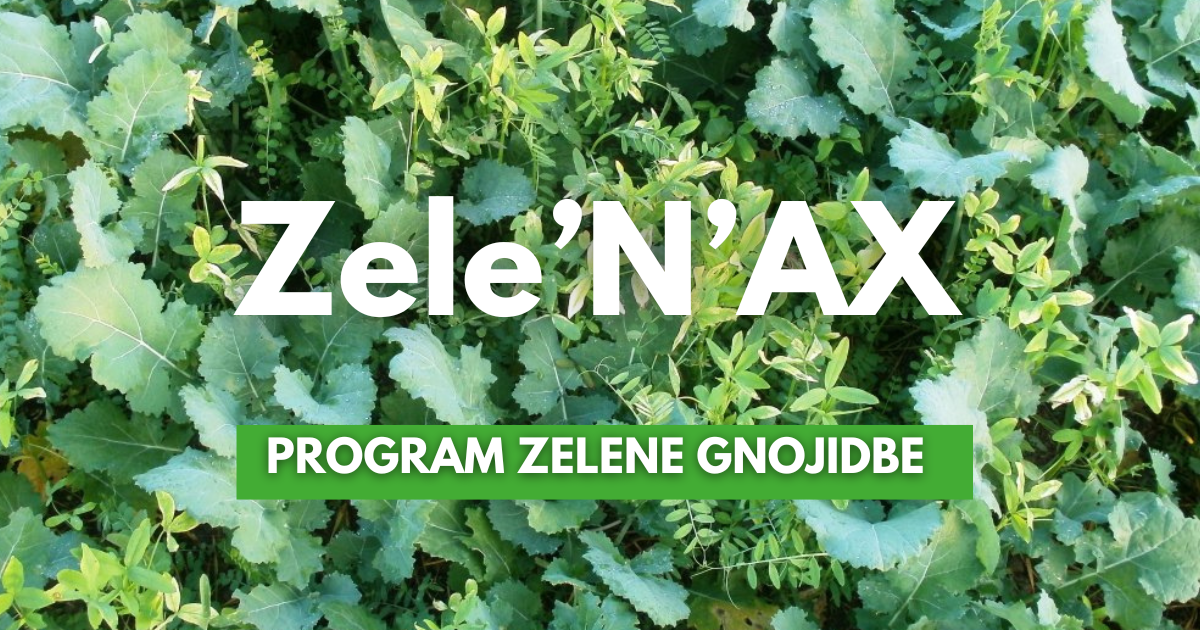
Our green mixtures will enrich the quality of your soil and improve its structure:
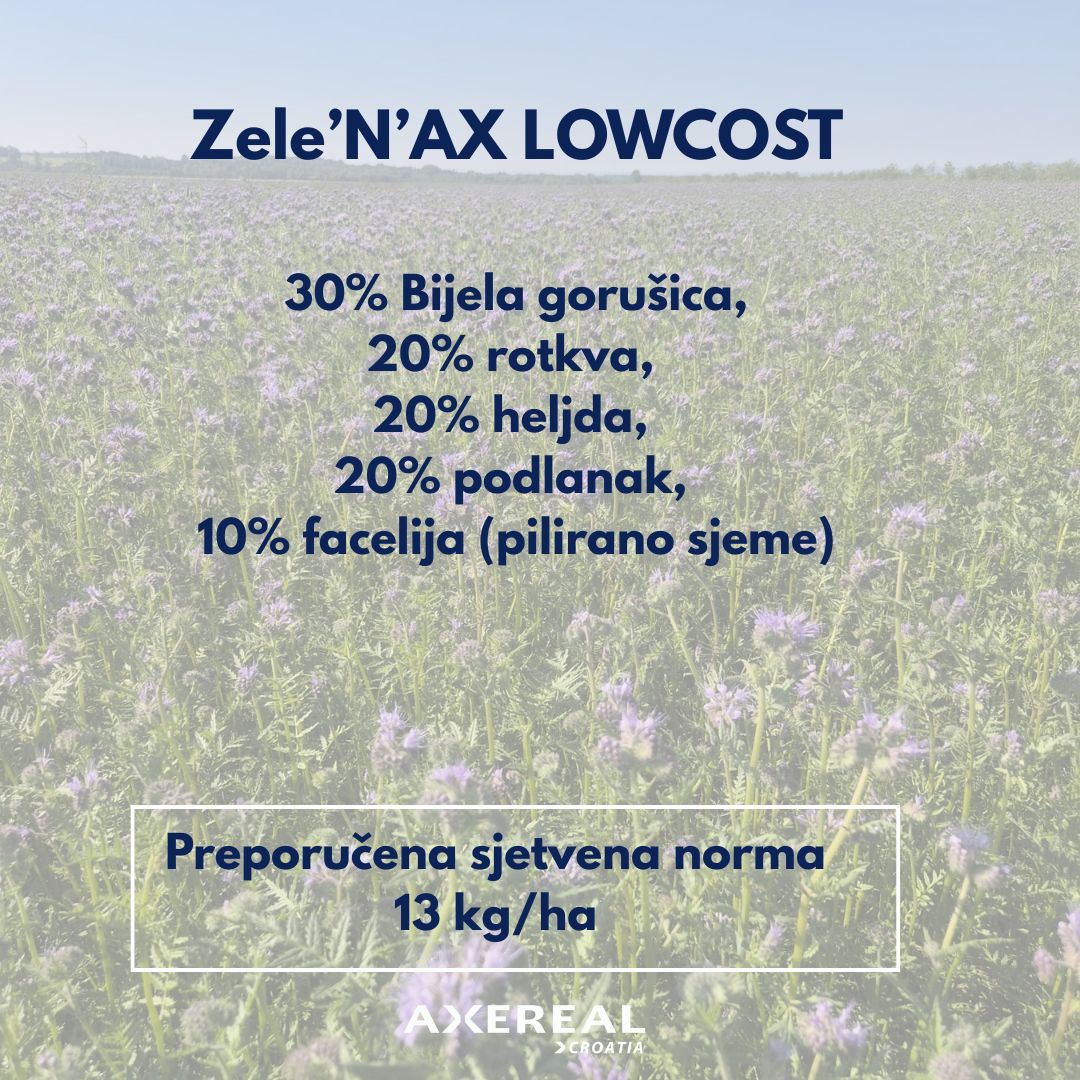
Zele'N'AX LOWCOST– Some crops from this mixture are very tolerant of summer weather conditions and quickly develop biomass.
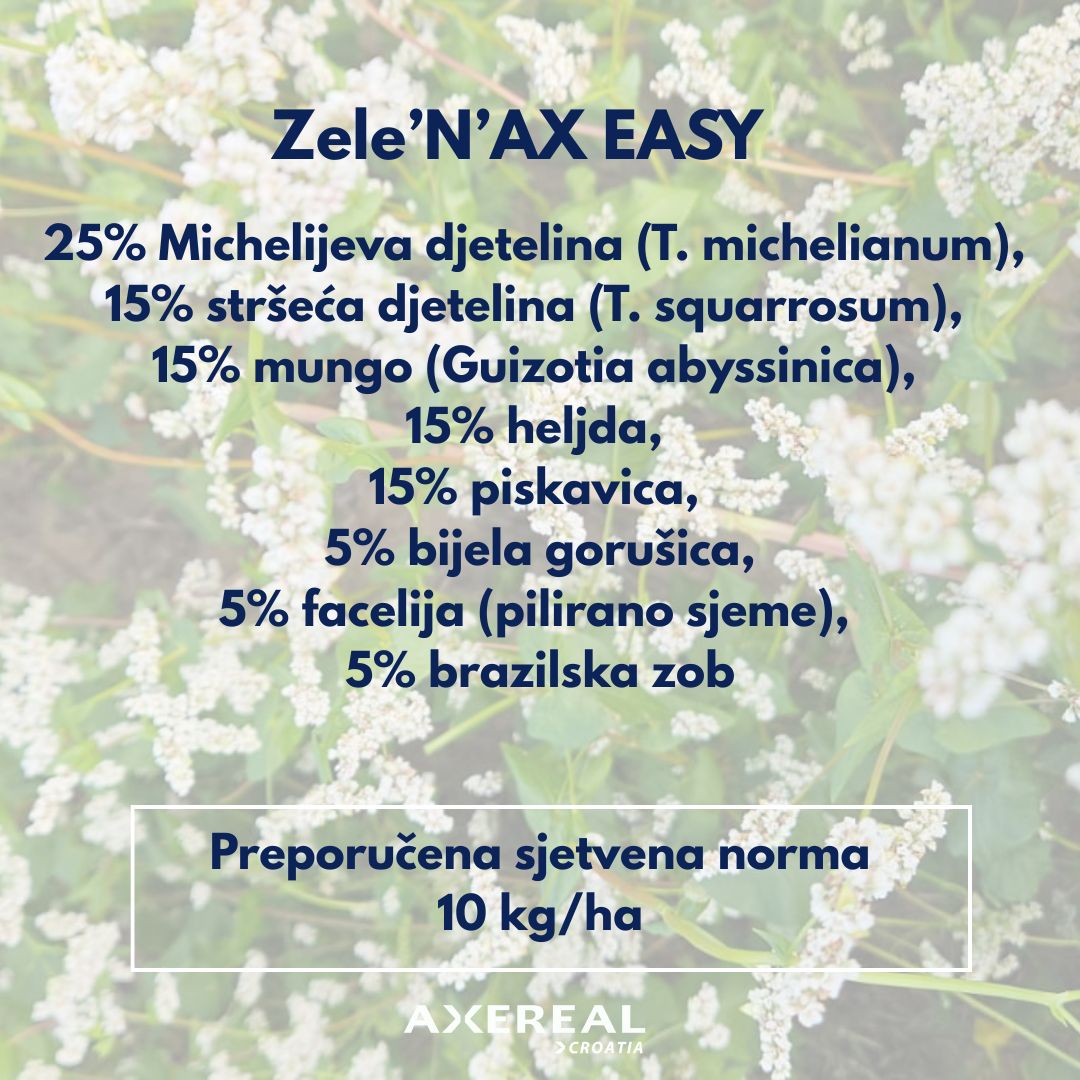
Zele'N'AX EASY – High proportion of legumines; as much as 40% of this mixture is clover.
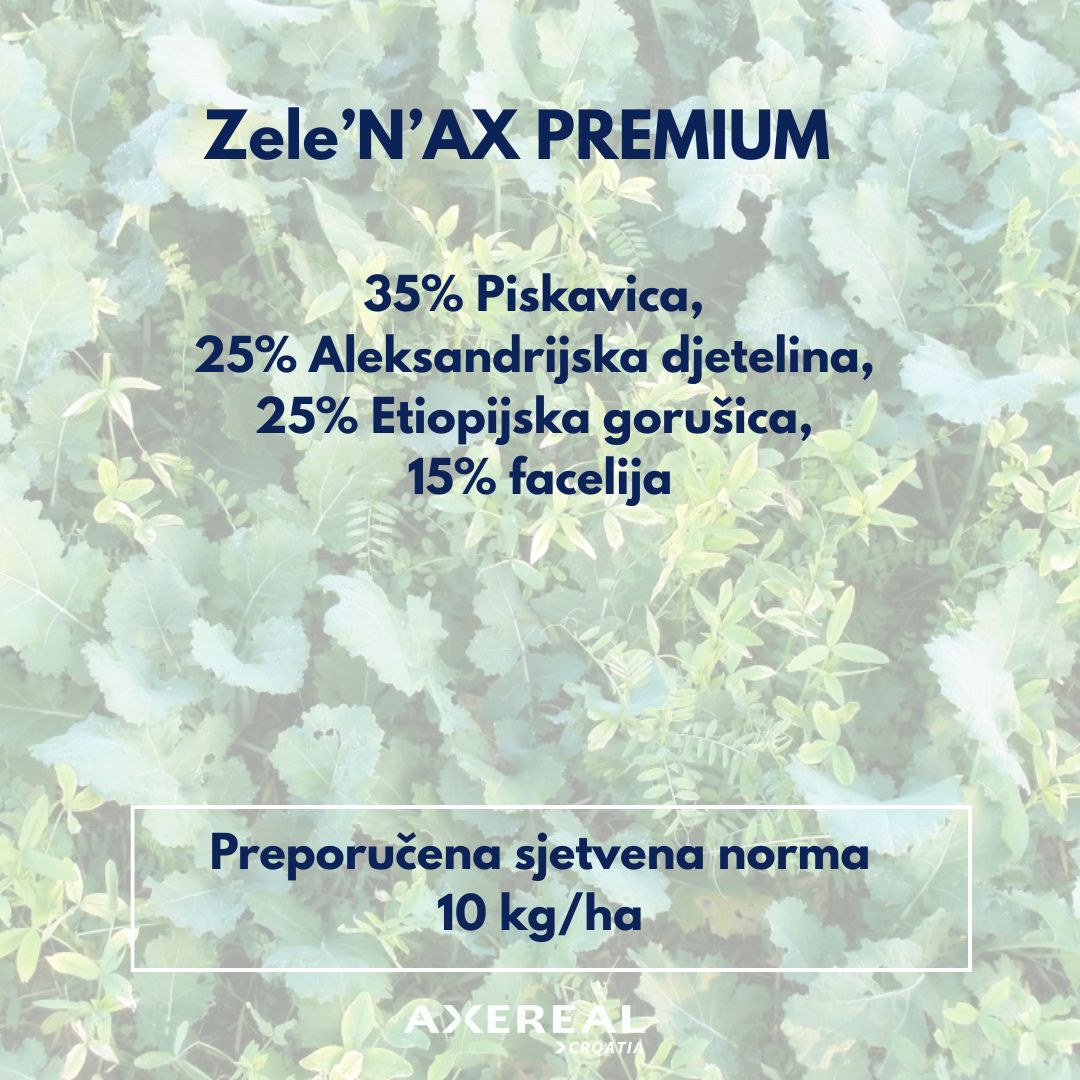
Zele'N'AX PREMIUM – Excellent soil cover even during the winter. Fenugreek and clover belong to leguminoses and they fix a significant amount of nitrogen from the environment and leave it for the next crop.
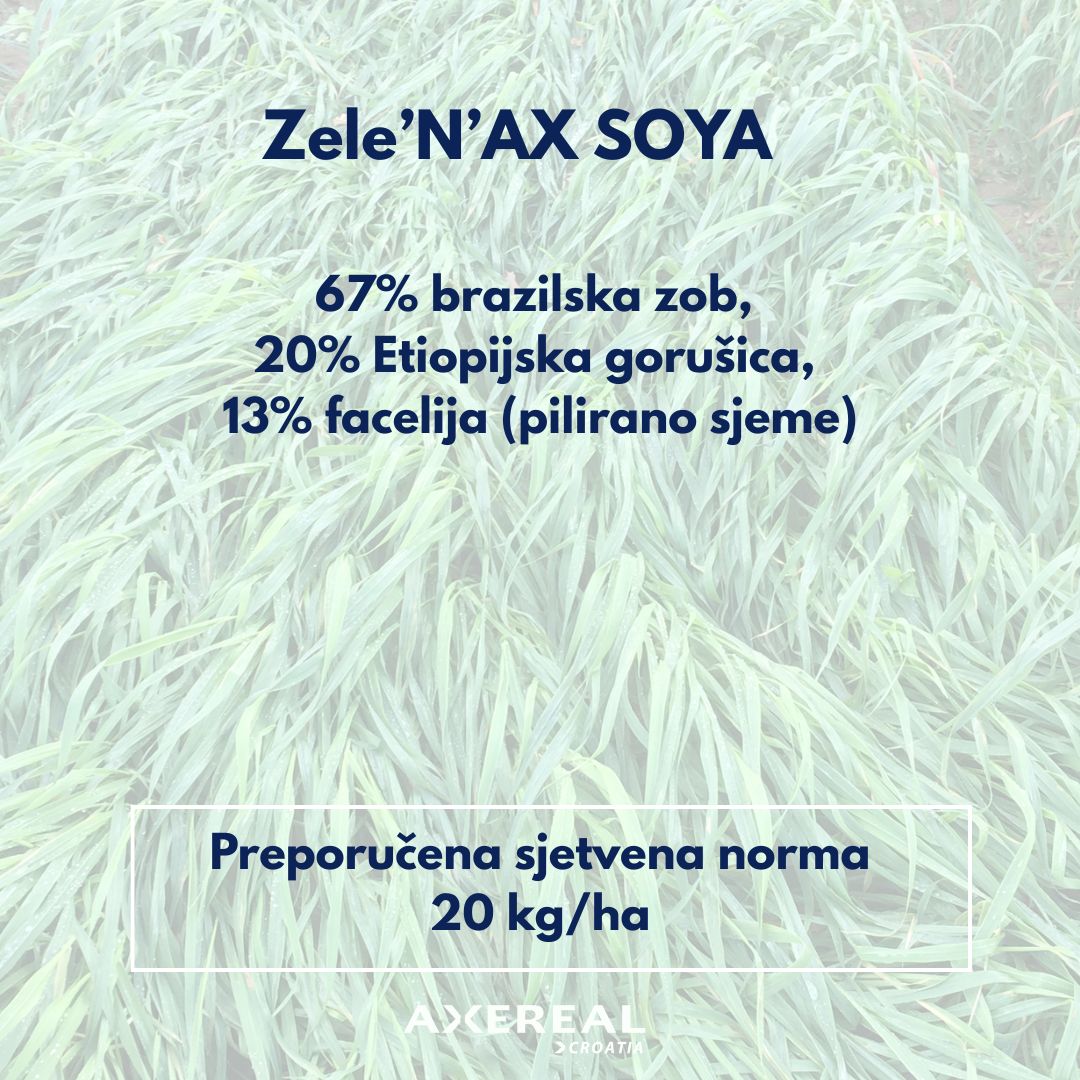
Zele'N'AX SOYA – An economically viable solution that ensures good biomass and a developed root system that improves soil structure.
The benefits of our mixtures for green fertilization are:
🟢 Develop good leaf biomass and cover the soil well,
🟢 Develop a strong root system, which improves the soil structure, and
🟢 Certain mixtures contain legumes that bind nitrogen from the environment and leave it for the next crop and enrich the soil.
Sowing can be done immediately after the harvest of winter crops until the end of August.
25kg packaging.
Champs à renseigner
Image standard
Champs à renseigner
Texte
Recommended sowing rate: 13 kg/ha
Sowing time: As soon as possible after harvesting winter crops.
Sowing depth: 1-2 cm (sowing can also be done in the simplest way, e.g. with a spreader, after which rolling can be done).
Next crop: winter or spring crop. The full effect of this mixture is achieved if the next crop is a winter crop.
💡Good to know: Some crops from this mixture are very tolerant of summer weather conditions and quickly develop plant mass. Sowing is very easy thanks to the small seeds. Buckwheat is a good bee pasture, however, do not let buckwheat form fruit.
Champs à renseigner
Image standard
Champs à renseigner
Texte
Recommended sowing rate: 10 kg/ha
Sowing time: As soon as possible after the main crop is harvested.
Seeding depth: 1-2 cm (sowing can also be done in the simplest way, e.g. with a spreader, after which rolling can be done).
Next crop: winter or spring crop (we do not recommend soybeans as the next crop). To fully benefit from this mixture, it is recommended to use it before the winter crop, as the mineralization of organic nitrogen will then be maximum.
💡Good to know: Clover has a high proportion of legumes, as much as 40% of this mixture. During the winter period, freezing easily occurs. However, in the case of a mild winter, individual components in the mixture can overwinter. In this case, one pass with a roller during a period of low temperatures will be sufficient.
Champs à renseigner
Image standard
Champs à renseigner
Texte
Recommended sowing rate: 10 kg/ha
Recommended sowing time: as soon as possible after the harvest of winter crops until the end of August.
Sowing depth: 2 cm
Next crop: winter or spring crop (soybeans should not be the next crop).
💡Good to know: A green mixture that develops a large plant mass and improves soil structure. If left in the field until late autumn, it can serve as an excellent ground cover during the winter. It consists of four components, half of which are leguminoses. Fenugreek and Alexandrian clover belong to leguminoses and as such they fix a significant amount of nitrogen from the environment and leave it for the next crop. Ethiopian mustard germinates and sprouts quickly and develops broad leaves that quickly cover the soil. The broad leaves compete with weeds and prevent their emergence until the next crop is sown. The entire mixture consists of small seeds, which allows for uniform sowing and rapid emergence. The biomass height reaches a maximum of 70–90 cm and the mixture can be left to overwinter (freezes at temperatures around -10 °C) or can be destroyed at the end of winter by rolling or plate.
Destroying the cover crop after winter will optimize the mineralization of organic nitrogen fixed by the cover crop, as well as nitrogen from the soil. This will make the nitrogen more available to the plant in the spring. This increases the availability of nitrogen for the next crop and helps optimize the overall nitrogen supply. Do not destroy the cover crop too late to avoid competition for soil moisture and slower soil warming.
Champs à renseigner
Image standard
Champs à renseigner
Texte
Recommended sowing rate: 20 kg/ha
Sowing time: Immediately after the harvest of winter crops until mid-September. If sown a little later, it can be left in the field during the winter and destroyed in March.
Sowing depth: 2-3 cm
Next crop: soybeans or sunflowers.
💡Good to know: An economically viable solution that ensures good biomass and a developed root system that improves soil structure. The mixture itself overwinters well, but can freeze at temperatures of -13 °C. Otherwise, it can be destroyed at the end of winter by rolling or plate. When used after late soybeans, Zele’N’AX SOYA helps to bind the remaining mineralized nitrogen and store it in organic form. This nitrogen can then be gradually released for the next spring crop. Destroying the cover crop after winter promotes the mineralization of organic nitrogen contained in the biomass of the cover crop, as well as organic nitrogen from the soil. This makes nitrogen more available to plants in the spring, increasing its availability for the next crop and optimizing the overall nitrogen supply. The cover crop should not be destroyed too late to avoid delayed nitrogen release and possible competition with the spring crop.
Champs à renseigner
Champs à renseigner
Texte
Product photos on the website are for informational purposes only and serve as illustrations. Minor deviations from the photo shown are possible.


